Introduction to Connector HSSGamepad
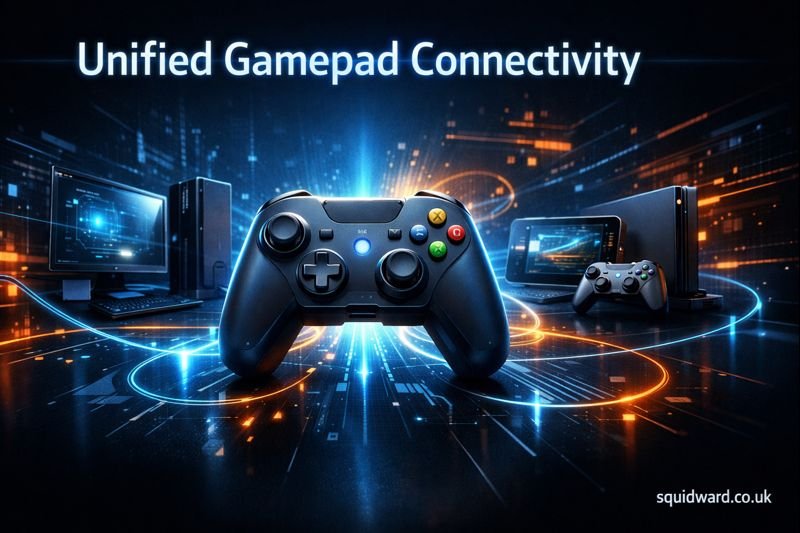
The modern gaming ecosystem is no longer limited to a single device or platform. Players today move fluidly between desktop computers, laptops, consoles, handheld systems, and even mobile devices. As this flexibility has grown, so has the demand for reliable controller connectivity that works consistently across environments. This is where the concept of the connector HSSGamepad becomes increasingly relevant. It represents a unified approach to controller integration, designed to reduce compatibility barriers and simplify how input devices communicate with different systems. Instead of forcing users to adapt to platform‑specific limitations, the connector HSSGamepad focuses on adaptability, reliability, and user‑friendly implementation.
At its core, connector HSSGamepad addresses one of the most persistent challenges in gaming hardware: inconsistency. Different platforms often require different drivers, mappings, or connection standards. For users who own multiple controllers or switch platforms frequently, this can become frustrating and time‑consuming. The connector HSSGamepad is designed to streamline this process, creating a smoother experience that allows players to focus on performance and enjoyment rather than technical setup.
What Connector HSSGamepad Is and Why It Matters
Connector HSSGamepad can be understood as a bridge between controllers and host systems. It combines physical connectivity methods with internal logic that translates controller inputs into a format the target system can understand. This translation layer is essential, as different platforms interpret button presses, analog stick movement, and trigger input in slightly different ways. By handling these differences internally, the connector reduces the need for manual configuration or third‑party software.
Its importance becomes clearer when considering how diverse the gaming landscape has become. A single household may include a gaming PC, multiple consoles, and mobile devices. Traditionally, each of these systems would require its own compatible controller. With connector HSSGamepad, the emphasis shifts toward reuse and flexibility. One controller can be used across multiple systems with minimal effort, making the gaming experience more efficient and accessible.
Core Design Principles and Technical Approach
The design philosophy behind connector HSSGamepad centers on universality and stability. From a technical standpoint, the connector relies on widely supported connection standards such as USB and wireless protocols. These standards are enhanced by firmware or internal logic that manages signal interpretation, ensuring that inputs are transmitted accurately and without noticeable delay.
Another key principle is low latency. Input lag can significantly affect gameplay, especially in fast‑paced or competitive environments. Connector HSSGamepad solutions are engineered to minimize delay between user input and on‑screen response. This is achieved through optimized data handling and efficient signal processing, allowing even wireless connections to perform within acceptable response thresholds.
Reliability is equally important. The connector is designed to maintain stable communication during extended sessions, reducing the likelihood of dropped connections or unresponsive inputs. This stability makes it suitable not only for casual use but also for professional or competitive settings where consistency is critical.
Platform Compatibility and Device Support
One of the defining strengths of connector HSSGamepad is its broad compatibility. It is intended to function across a wide range of platforms, including personal computers, consoles, and supported mobile devices. This flexibility is achieved by abstracting controller input into a standardized format before delivering it to the host system.
For PC users, this means that controllers from various manufacturers can be recognized without complex driver installations. The connector handles input mapping internally, allowing games and applications to treat the controller as a native device. Console users benefit from similar advantages, particularly when attempting to use non‑standard or third‑party controllers that might otherwise be unsupported.
Mobile gaming also benefits from this approach. As mobile titles increasingly support external controllers, connector HSSGamepad simplifies pairing and recognition. This allows players to enjoy more precise controls without relying solely on touch input, which can be limiting in certain genres.
Setup Process and User Experience
Ease of setup is a major focus of connector HSSGamepad. Most implementations follow a plug‑and‑play philosophy, meaning that once the connector is attached or paired, the system automatically recognizes the controller. This eliminates the need for extensive configuration and makes the technology accessible even to users with limited technical experience.
For those who prefer more control, advanced configuration options are often available. These may include button remapping, sensitivity adjustments, and profile creation for different games or platforms. Such features allow users to fine‑tune their setup according to personal preference or specific gameplay requirements.
The overall user experience is designed to be intuitive. Clear feedback during connection, consistent behavior across systems, and minimal maintenance requirements contribute to a smoother and more enjoyable interaction with the technology.
Performance and Responsiveness in Real‑World Use
Performance is a critical metric for any controller integration solution. Connector HSSGamepad is designed to deliver responsive input that closely matches the performance of native connections. In wired configurations, response times are typically near instantaneous, making them ideal for precision‑focused gameplay.
Wireless configurations prioritize balance between convenience and performance. Modern wireless standards allow for fast data transmission with minimal interference, ensuring that players experience smooth and reliable input even without a physical cable. While wireless connections may introduce slight latency, it is generally low enough to remain unnoticeable in most gaming scenarios.
Consistency over long sessions is another important factor. Connector HSSGamepad solutions are built to maintain stable performance over time, reducing the risk of input degradation or connection loss during extended play.
Security and Input Integrity
As controllers become more integrated into connected systems, security and data integrity become increasingly important. Connector HSSGamepad incorporates safeguards to ensure that input signals are transmitted securely and accurately. This helps prevent unauthorized input access and reduces the risk of signal interference.
Maintaining input integrity also means ensuring that button presses and movements are interpreted exactly as intended. Accurate translation reduces errors and improves the overall reliability of the gaming experience, particularly in environments where precision is essential.
Troubleshooting and Common Challenges
Despite its advantages, connector HSSGamepad is not immune to challenges. Common issues may include pairing difficulties, intermittent disconnections, or input lag. These problems are often related to environmental factors such as wireless interference, outdated firmware, or incompatible hardware.
Basic troubleshooting steps usually resolve most issues. Restarting devices, updating firmware, and ensuring a stable connection environment can significantly improve performance. In some cases, switching between wired and wireless modes may help identify the most stable configuration for a given setup.
Understanding these challenges and how to address them ensures that users can maintain a reliable and enjoyable experience over time.
Advantages Over Traditional Controller Interfaces
Compared to traditional controller interfaces, connector HSSGamepad offers clear advantages in flexibility and convenience. Traditional solutions often lock controllers to specific platforms, requiring users to purchase multiple devices or adapters. Connector HSSGamepad reduces this fragmentation by promoting reuse and cross‑platform compatibility.
This unified approach also simplifies maintenance and setup. Instead of managing multiple drivers or configuration tools, users rely on a single connector system that adapts automatically. This not only saves time but also reduces the likelihood of errors or conflicts.
Future Outlook and Ongoing Development
The future of connector HSSGamepad is closely tied to the evolution of gaming technology. As new platforms emerge and existing systems continue to evolve, the demand for adaptable input solutions will grow. Future developments may include support for emerging wireless standards, enhanced customization features, and deeper integration with next‑generation gaming environments.
The connector HSSGamepad concept is well positioned to evolve alongside these trends. Its focus on universality and performance ensures that it remains relevant as gaming continues to expand beyond traditional boundaries.
Conclusion
Connector HSSGamepad represents a thoughtful response to the challenges of modern controller integration. By prioritizing compatibility, performance, and ease of use, it offers a unified solution that aligns with the diverse needs of today’s gamers. While no technology is without limitations, the connector HSSGamepad demonstrates how intelligent design can simplify complex ecosystems. As gaming continues to span multiple devices and platforms, solutions like this will play an increasingly important role in shaping seamless and enjoyable user experiences.
Read More: Squidward